What does it really take to make a handmade piece?
And what is it really worth?
At T.A.I Studio, we work with natural materials and traditional weaving techniques from Southern Thailand.
Every basket, bag and object begins with raw materials gathered from the landscape around us and passes through many hands before reaching its final form.
Yet much of that work remains invisible.
We created this story to explore the journey behind a single piece — from field to finished object — and to share a closer look at the people, processes and time that shape every item we make.
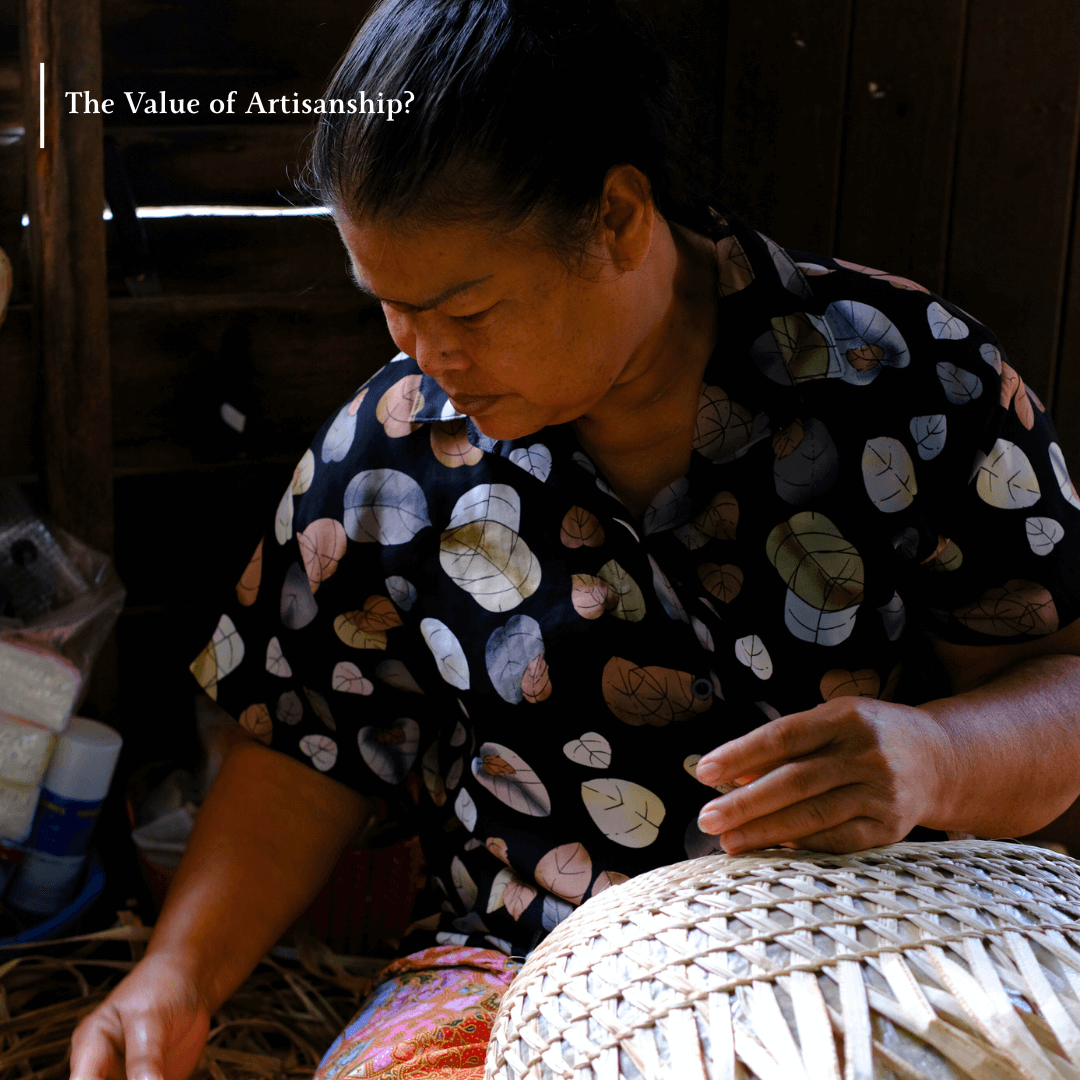
Pa’Niat weaving Banana Fibre to make our Toong Gluay Klong bags.
Time Is the First Ingredient.
From raw Banana trees to a finished, stitched, and packed basket, the journey takes 24 days — and that’s not counting the 6+ months it takes to grow the trees.
Drying. Harvesting. Weaving. Stitching. Checking. Packing.
Each step labour intensive.
Each step done by hand.
Each step done with care.
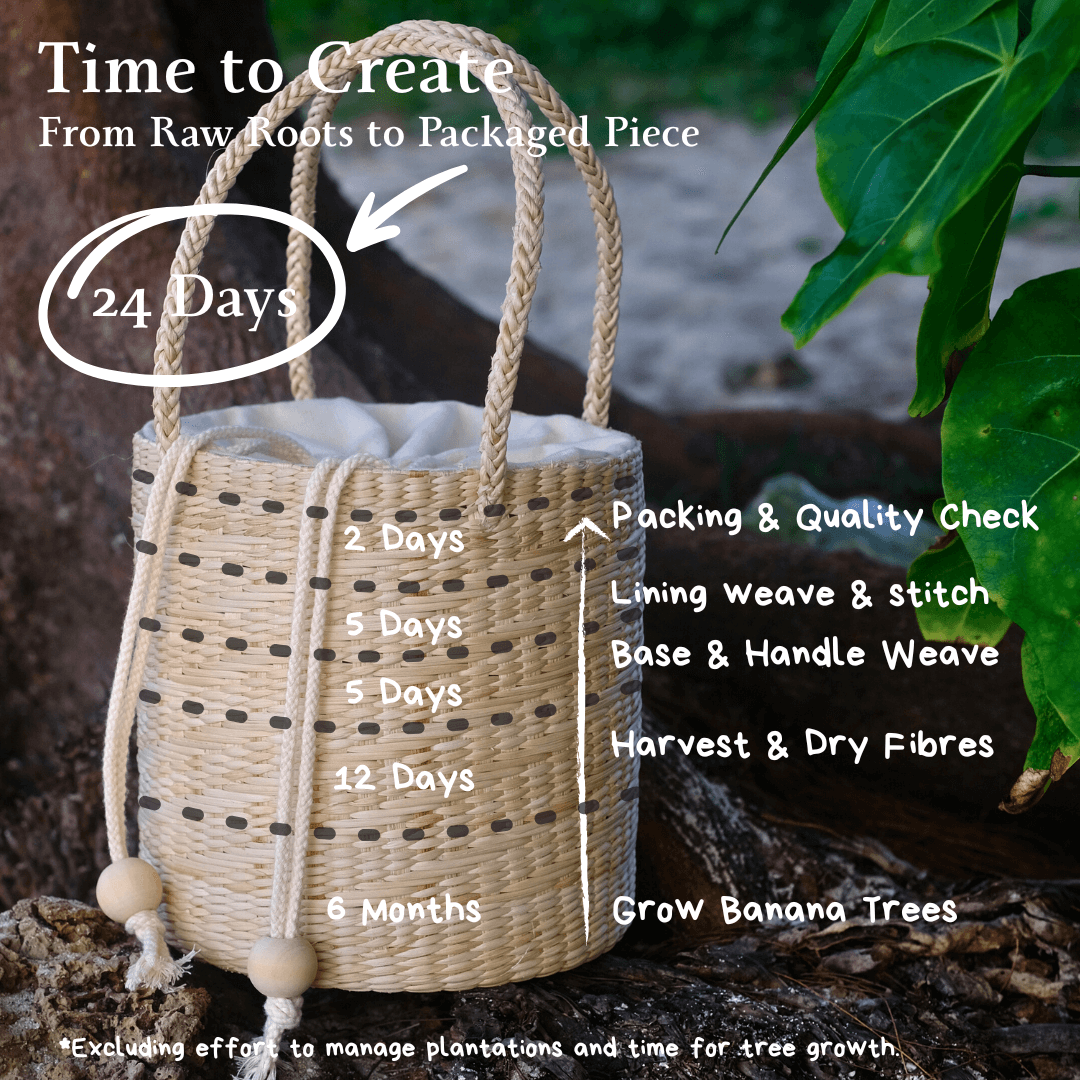
This is the prototype our followers voted for.
The Hands Behind the Work.
Our pieces aren’t made in factories. They’re made by people we know.
Pa’Ree harvests and dries the Banana fibres.
Pa’Niat weaves the body of the Banana bags.
P’Wit looms the lining that we also use in our Krajood bags.
Na’Yenn stitches it all together.
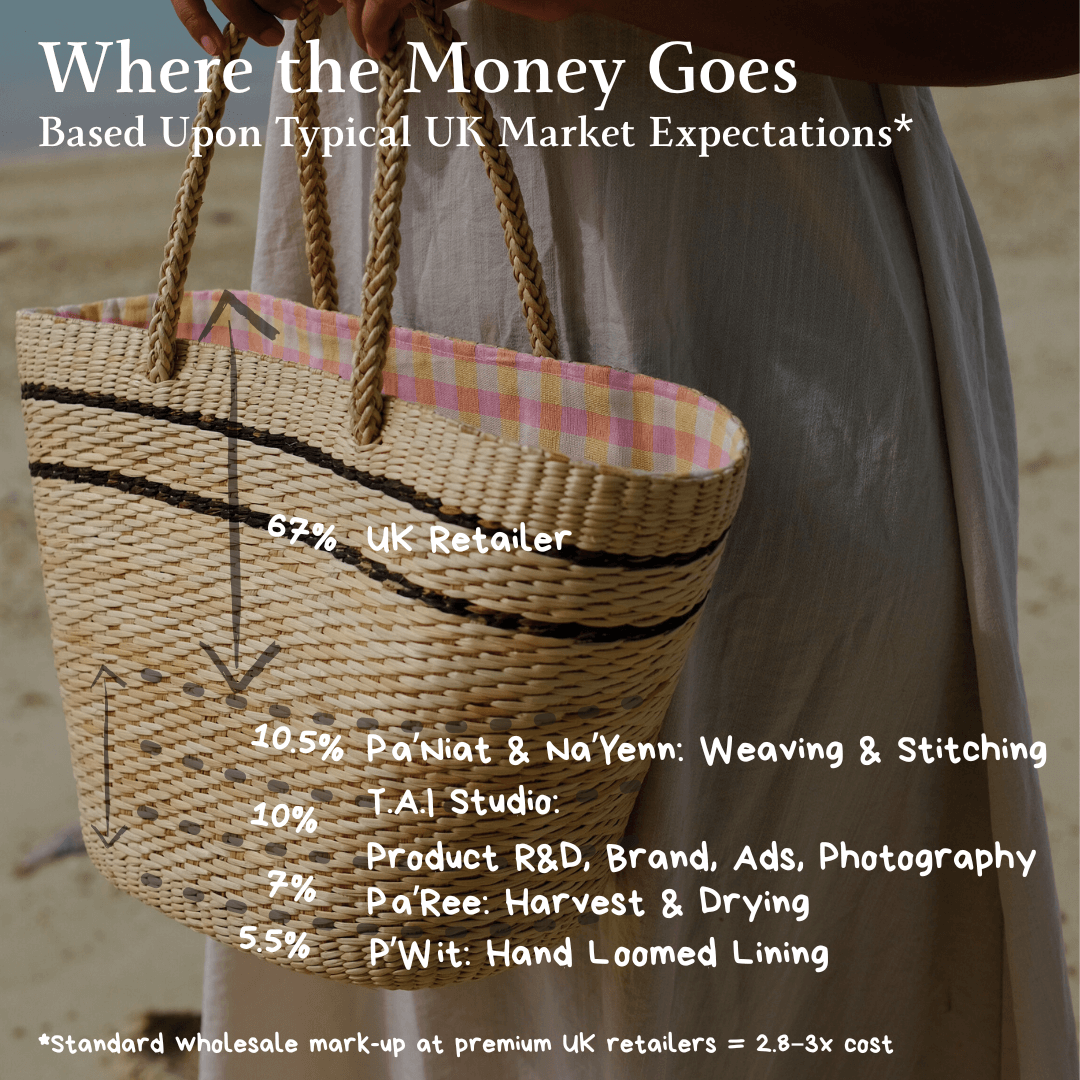
The profit distribution based upon typical UK retailer mark-up expectations.
Where Does the Value Go?
In many traditional Western retail models, the largest share of the final retail price sits furthest from the maker.
In the UK, a premium stockist might mark up the wholesale price by 2.8x–3x.
Which means that for every bag sold:
67% may go to the retailer
On average ~6% goes to each of the makers (in our model)
10% goes to us — to cover everything else
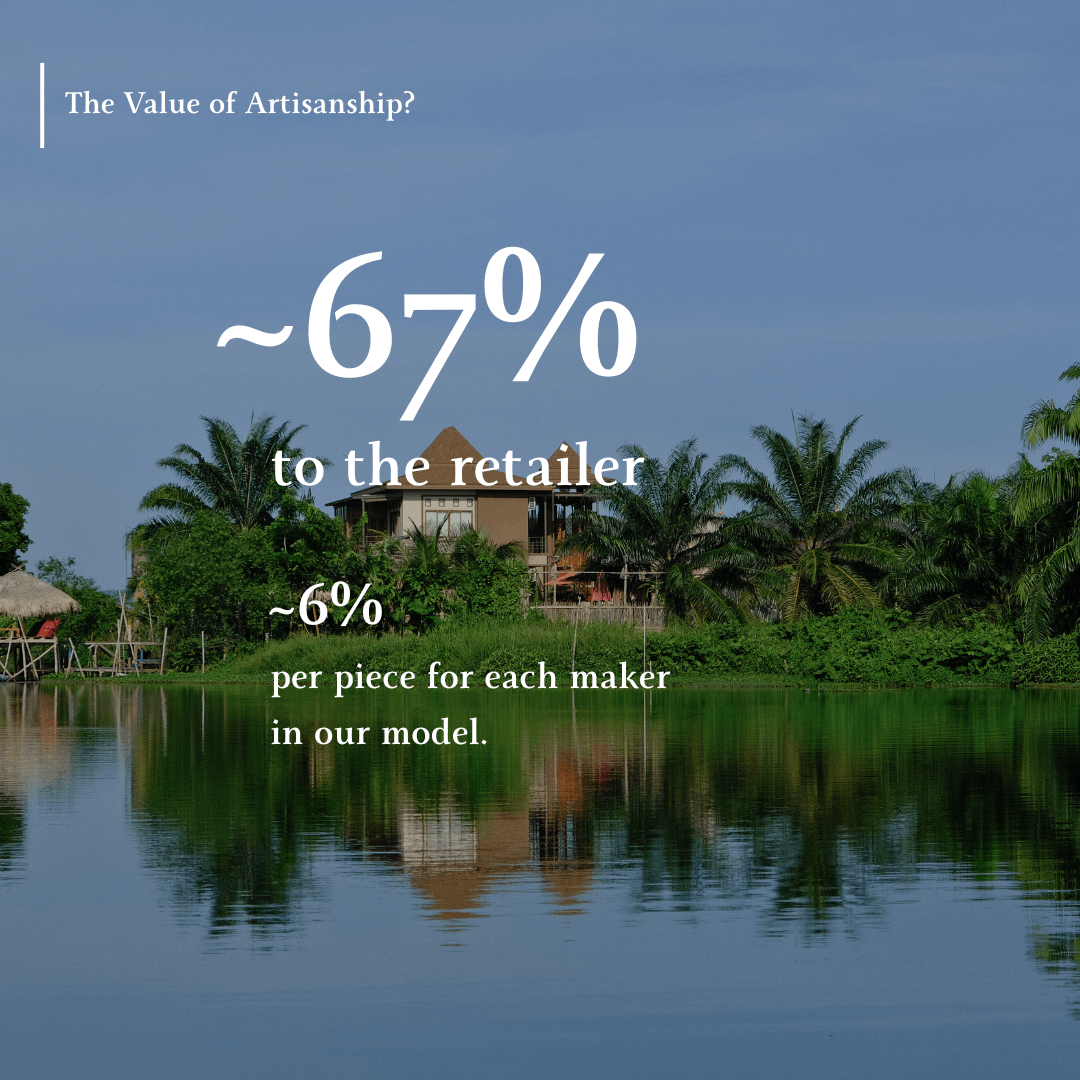
Ethical profit-sharing?
The Hidden Equation
We calculated the full cost of bringing a single new design to market. From product testing and sample weaving to packaging, insurance, and outreach.
The result?
£70–£120 per piece.
Depending on style, complexity and finishes like hand-embroidery or leather. That figure ignores the investment of time, effort and funding in order to be in the position in the first place.
Economies of scale only come with scale.
How can artisinal-owned brands break through with such a high cost of entry?
How does this sit in the context of a market which celebrates artisanship?
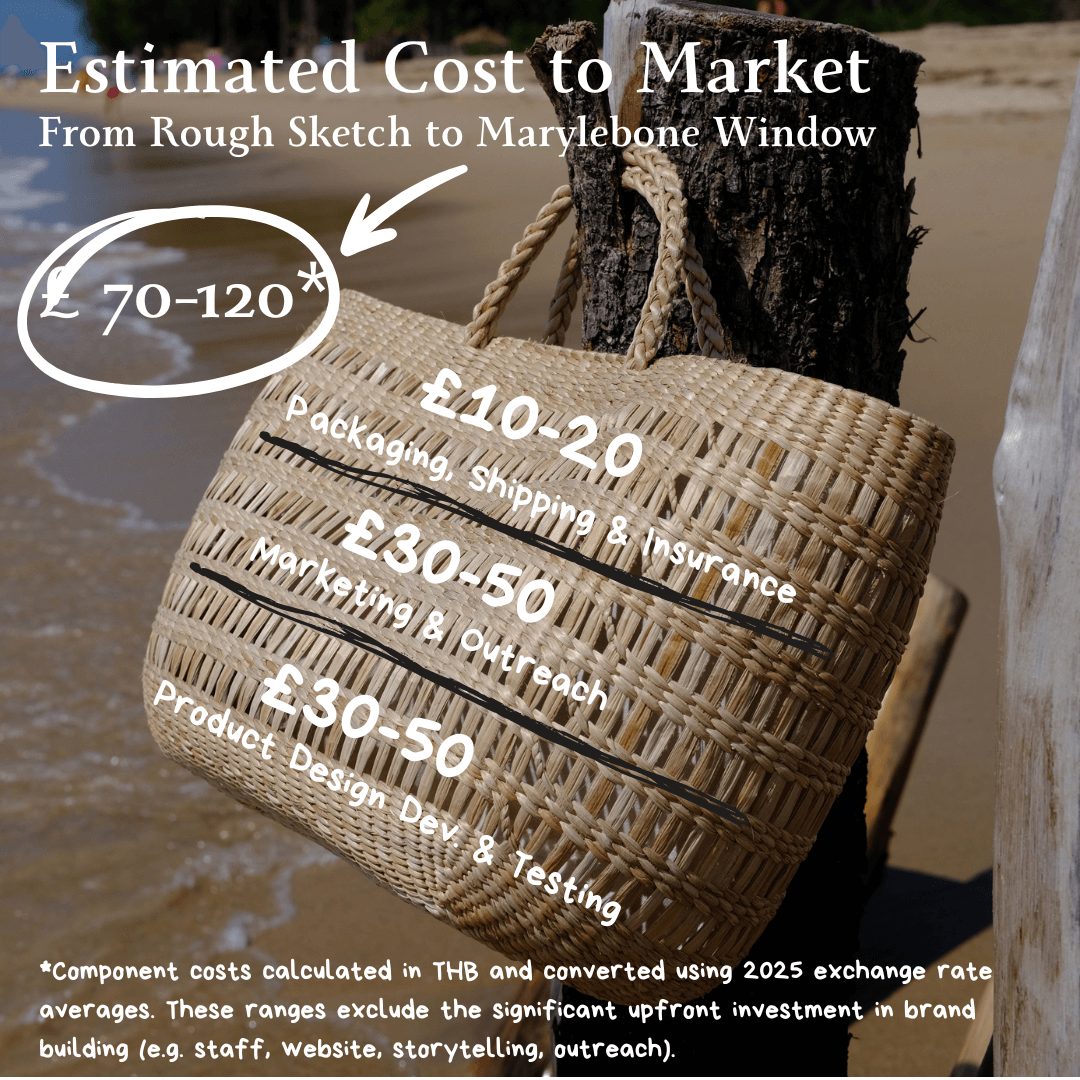
The costs incurred with bringing a Banana Fibre bag to market in the UK.
Has fashion taught us to forget how things are made?
Is artisan work — especially when made by hand, far from London — still undervalued?
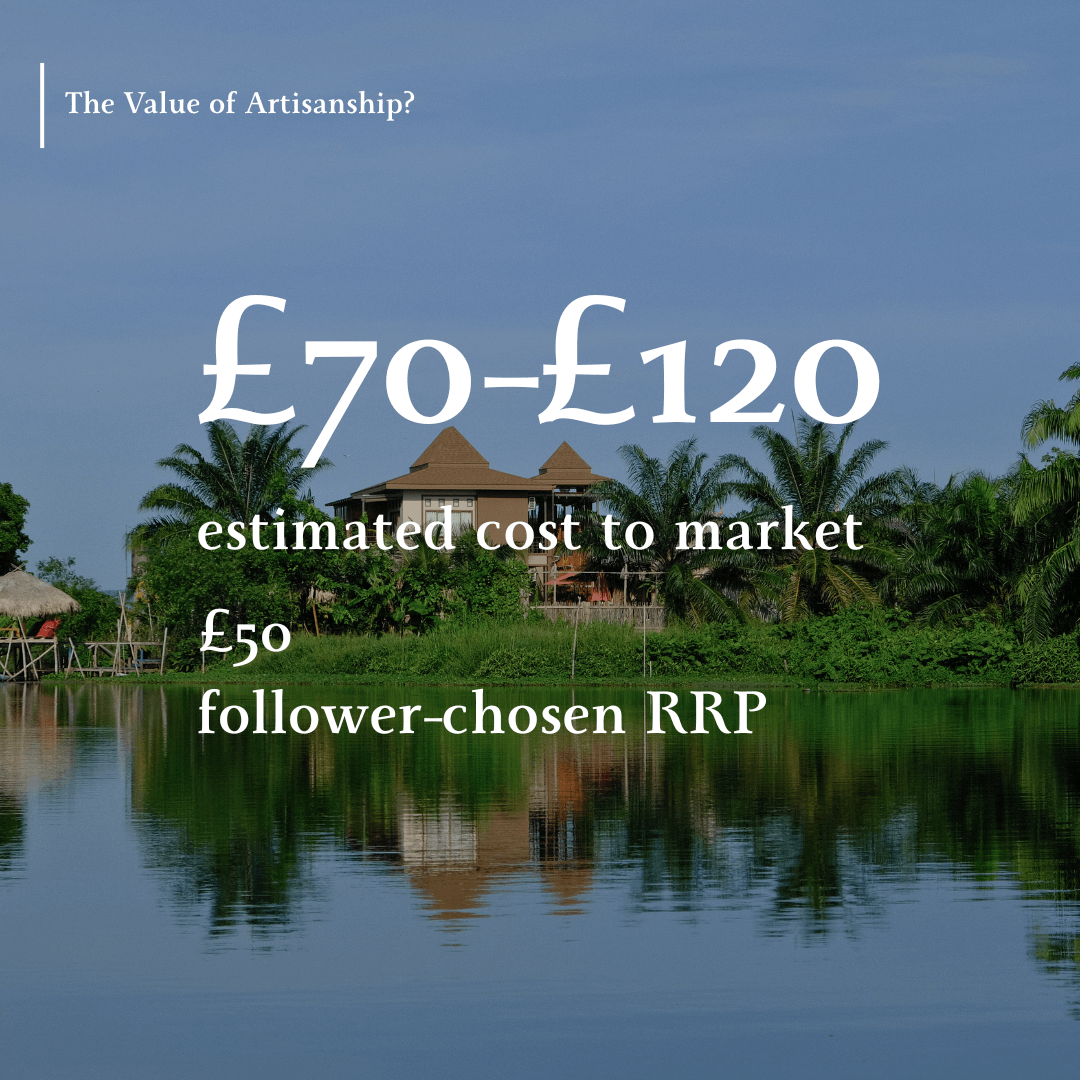
Cost vs Value. The hidden tension.
If a piece is made slowly, with tradition…
If it supports a network of real people…
If it carries heritage, not trend…
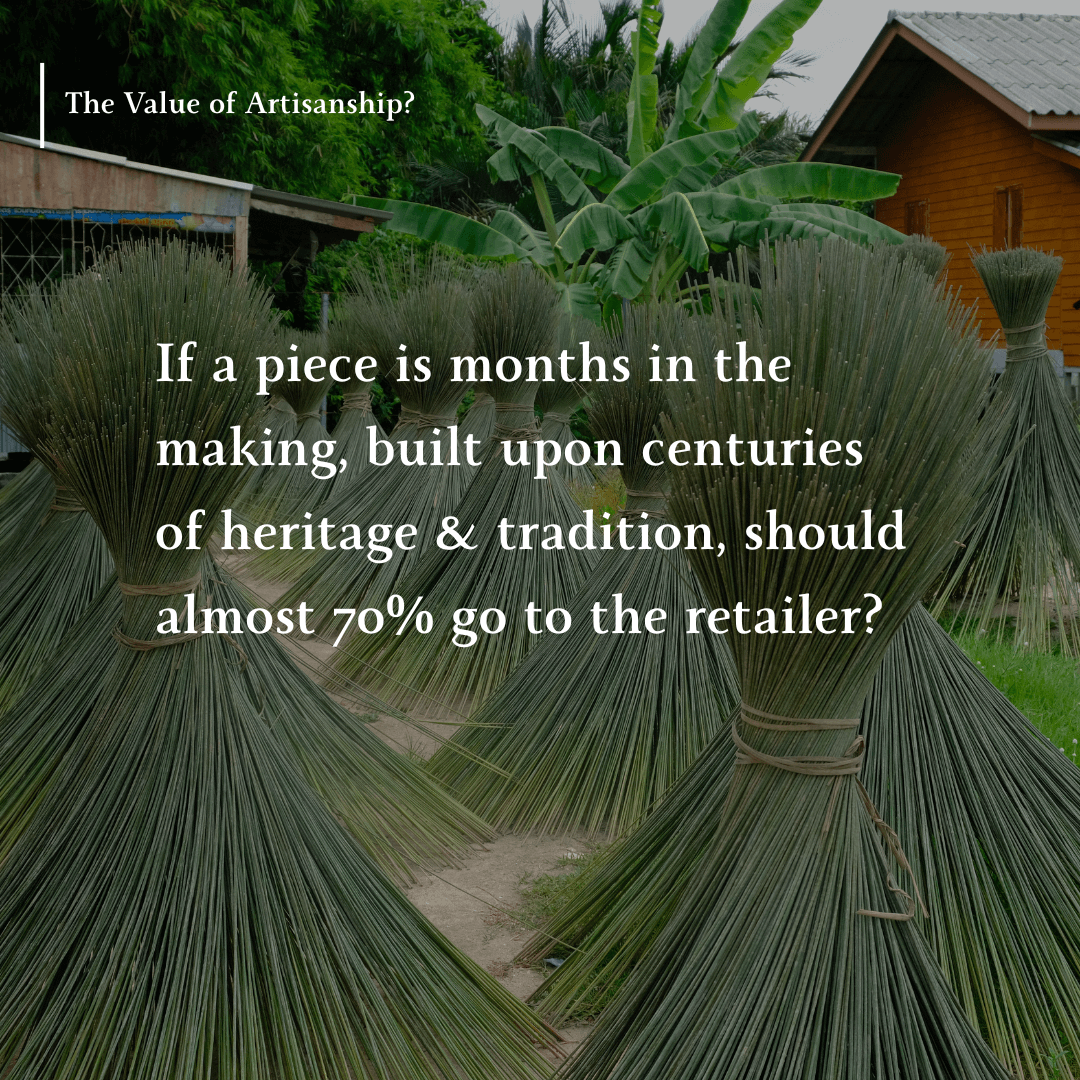
Should almost 70% of the retail price go to the retailer?
Does Western retail pricing support makers — or restrict them?
Is there a disconnect between what we pay and what we think it’s worth?
What do you think?
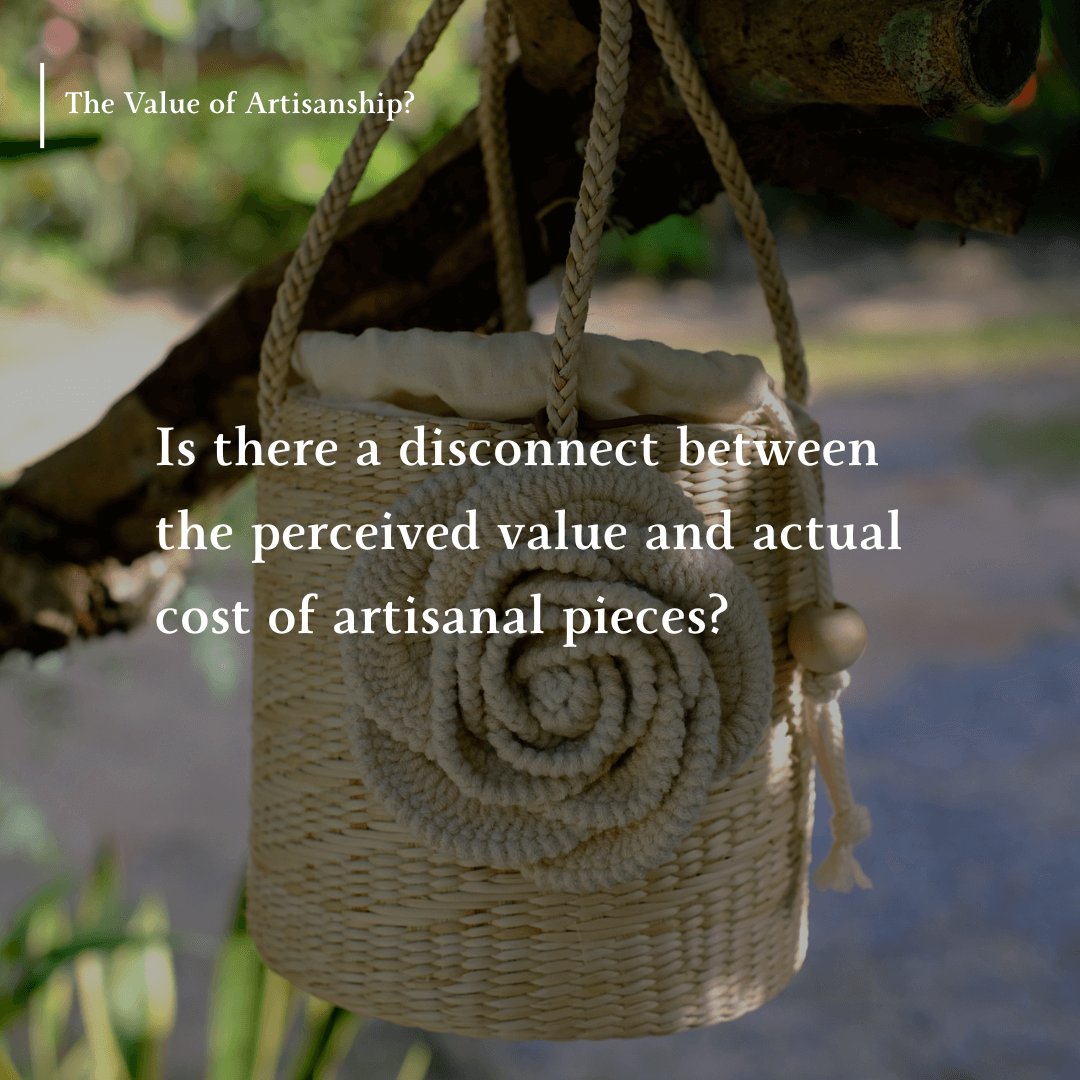
What do you think?
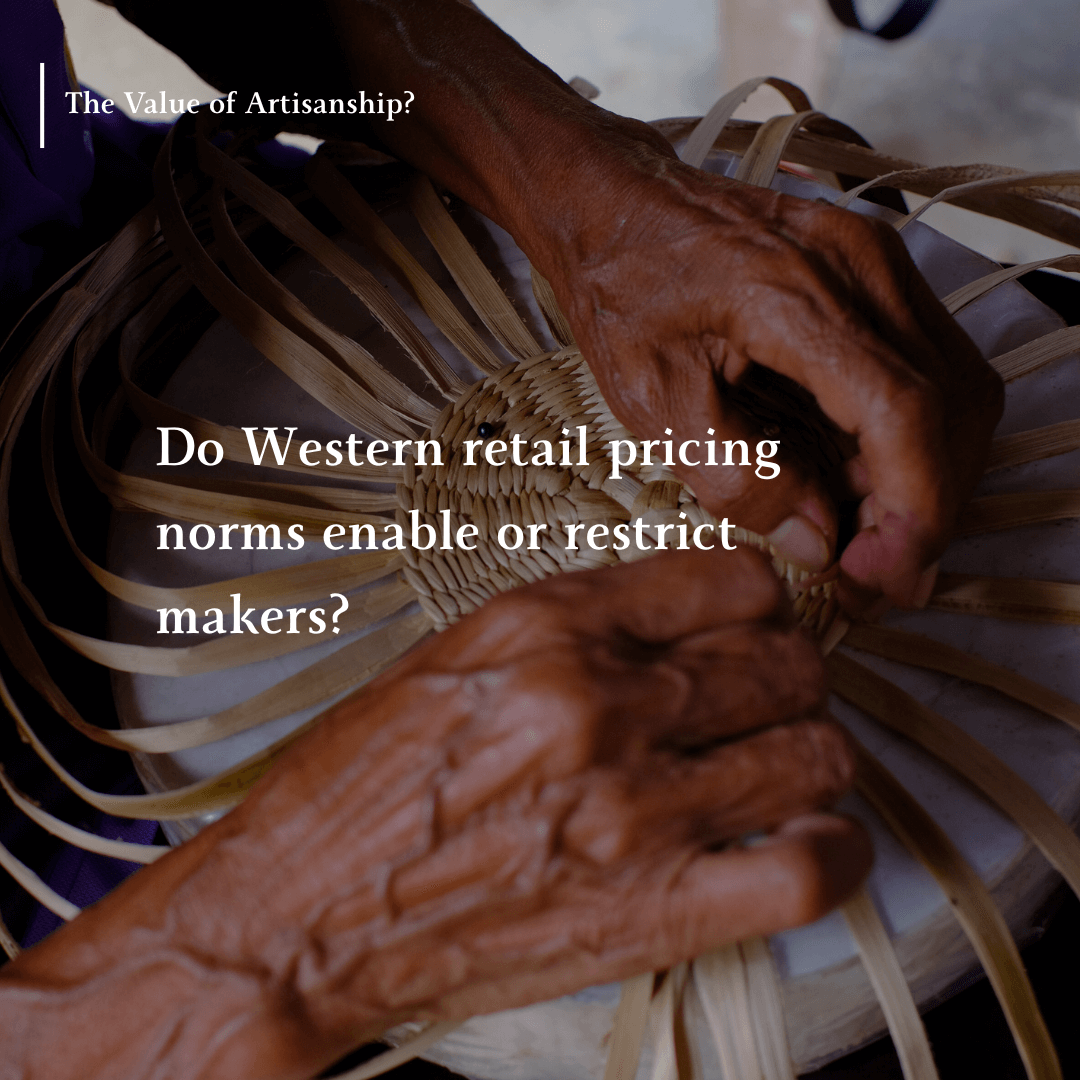
What’s the balance between ethical pay and profit?
How should we value the heritage & tradition of the makers?

What’s the real value of artisanship?
A Note from T.A.I Studio
We believe objects carry more meaning when we understand where they come from.
The landscapes, materials, traditions and people behind them become part of the story.
Our work is an attempt to preserve those connections while creating pieces designed for contemporary life and hospitality.
Thank you for taking the time to explore ours.
—
Follow along on Instagram
Want to work together? Contact us here.
